The Origin

Where it all began: three simple prompts that established the foundation

  • Human Prompt:

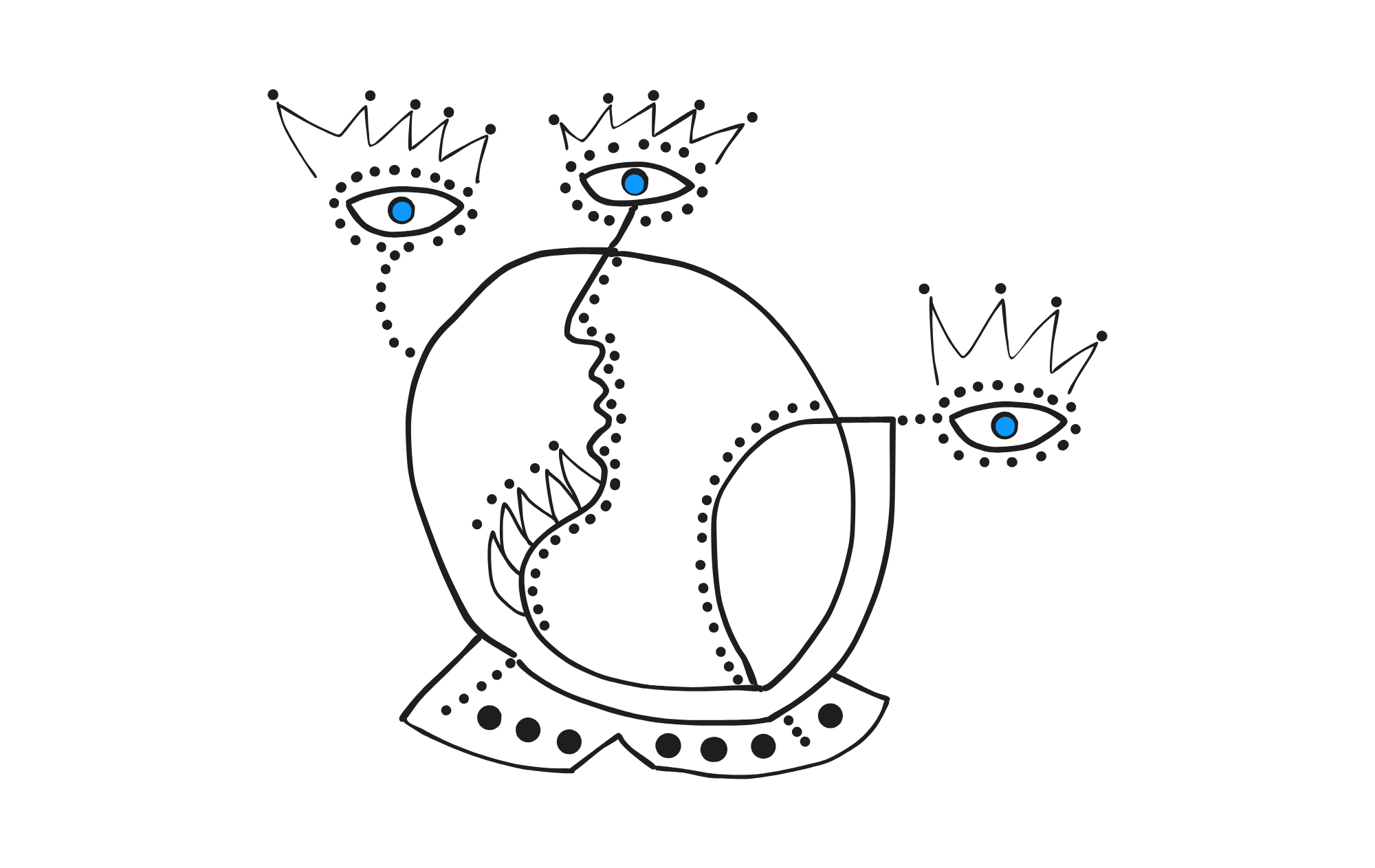
    Write a sci-fi short story about the Alien pictured here.

    Claude.AI Response:

    I've written a sci-fi short story inspired by your intriguing alien drawing. The story features Dr. Sarah Chen, an archaeologist who discovers that the three-eyed beings she's been studying aren't just ancient Martian carvings, but messages left by an advanced species called the Watchers—benevolent entities who guide emerging civilizations toward cosmic consciousness. The story explores themes of first contact, consciousness expansion, and humanity's place in a larger galactic community. I was particularly drawn to the unique three-eye arrangement in your drawing and the detailed sensor-like dots, which I interpreted as a being that perceives reality in ways beyond human understanding. Would you like me to develop any particular aspect of the story further, or explore a different interpretation of your alien character?

    Loading detailed content...

  • Human Prompt:

    No unrealistic Martian colonies. Let's stick to near-future sci-fi.

    Claude.AI Response:

    I've rewritten the story to be much more grounded in near-future possibilities. Now it's about Dr. Maya Patel, a SETI researcher who discovers an artificial signal from the Kepler-442 system containing an image of the three-eyed alien. The story deals with realistic challenges of interstellar communication (the 1,200-year delay) and focuses on how humanity would actually handle first contact through radio astronomy rather than impossible Mars colonies. The alien remains mysterious and compelling, but the setting is much more plausible—just advanced radio telescope technology and the kind of protocols SETI actually uses today.

    Loading detailed content...

  • Human Prompt:

    Skip the whole section on how the radio telescope signal was discovered. Start with humanity's reaction to the extra-terrestrial image from Kepler-442. Take an analytical approach, including expected responses across the range of belief systems.

    Claude.AI Response:

    I've rewritten the story to focus entirely on humanity's varied reactions to the alien image, taking an analytical sociological approach. The story examines how different belief systems, cultures, age groups, and institutions would realistically respond to first contact - from religious adaptations and scientific debates to generational divides and economic impacts. The narrative follows Dr. Elena Vasquez, a sociologist studying these responses, and shows how the three-eyed alien becomes a mirror reflecting existing human nature rather than changing it. The story explores both the inspiring (children's innocent curiosity) and troubling (riots, conspiracy theories) aspects of how humanity might actually handle such a revelation.

    Loading detailed content...

The Analysis

Adding real-world depth through climate and cultural commentary

  • Human Prompt:

    Indicate how these terrestrial responses interact with perceptions and beliefs about climate change.

    Claude.AI Response:

    I've integrated climate change perceptions and beliefs throughout the story, showing how first contact would interact with existing environmental debates. The additions explore: Conspiracy theories that frame alien contact as distraction from climate issues Environmental movement splits between those who see alien contact as urgency for Earth stewardship vs. those hoping for technological salvation Economic implications for fossil fuel companies and how they might respond Climate denial adaptations - some using alien contact to argue Earth's resilience, others framing climate change as a "worthiness test" Parallel patterns between climate science denial and potential alien contact denial Policy coordination challenges - noting the irony that humanity struggles to coordinate on planetary warming yet now faces cosmic contact The story now shows how the alien discovery wouldn't resolve existing divisions about climate change but would amplify them, with each side incorporating the extraterrestrial contact into their pre-existing worldview.

    Loading detailed content...

  • Human Prompt:

    Despite a few successes in the publishing industry around the topic of climate fiction, at WorldCon 2025 in Seattle, one panelist noted that cli-fi is "dead term," deeply unpopular in the publishing industry, given the current trend toward escapism. In a new document, provide an example of the kind of escapist popular culture that would be likely to emerge in reaction to the alien discovery. You may question the assumption.

    Claude.AI Response:

    I've created an analysis of the escapist culture that would emerge after alien first contact, but I've challenged the core assumption about what "escapism" would actually look like in this scenario. Rather than the expected space operas and alien adventures, I propose that true escapism would involve a "Great Mundane Revival" - entertainment obsessively focused on ordinary human activities like grocery shopping, farming, and office work. The logic is that when reality becomes cosmically overwhelming, audiences would seek refuge in aggressively normal content. The piece explores this through various media: - Literature celebrating suburban mundanity - Games about realistic farming and household tasks - Music featuring ambient kitchen sounds - Films about competent people doing ordinary jobs well However, I also question whether this represents pure escapism or something more profound - a form of "existential defiance" that asserts human-scale meaning in an infinite universe. The analysis suggests this cultural shift might actually be the most sophisticated response to cosmic overwhelm: caring deeply about small things when everything has become impossibly large. This framework could apply to climate fiction as well - perhaps the turn toward "escapism" reflects not avoidance but a need to ground human meaning in times of overwhelming global challenges.

    Loading detailed content...

  • Human Prompt:

    Given climate-related disruption and mass migration, escapism through your proposed "Great Mundane Revival" (entertainment obsessively focused on ordinary human activities like grocery shopping, farming, and office work) would promote an unattainable lifestyle, not dissimilar to the ones that are glamorized today through television shows about billionaires and such. Are people watching these shows from their cots in school gymnasiums?

    Claude.AI Response:

    You're absolutely right, and I've revised the analysis to acknowledge this crucial contradiction. The "Great Mundane Revival" would indeed function as lifestyle porn for the displaced—selling fantasies of suburban stability to people living in emergency shelters and converted gymnasiums. The revision now shows: - Climate refugees consuming entertainment about grocery shopping while living on food rations - People watching shows about home organization from emergency housing where they own nothing - Virtual farming games played by populations who've lost access to real agricultural land - The cruel irony of "mundane" entertainment becoming as unattainable as today's billionaire lifestyle shows The analysis now positions this entertainment as collective mourning disguised as escapism—people consuming fantasies of the stable, ordinary life that climate change has already destroyed. The "mundane revival" becomes a form of nostalgia for a world that no longer exists, making it perhaps even more cruel than traditional wealth-fantasy entertainment. This reframes the entire phenomenon: it's not about cosmic perspective or existential defiance, but about grieving a lost Earth while aliens watch from distant stars. The entertainment industry would be selling impossible normalcy to populations for whom "ordinary" life has become as fantastical as space opera. *you're making a joke about farm simulator, but that's already a thing, is it not?* You're absolutely right—Farm Simulator (Farming Simulator) is already a hugely popular, long-running game series that's been around for over a decade. I was treating it as a fictional example when it's actually a real phenomenon that already demonstrates some of the dynamics I was describing. The existing popularity of Farming Simulator among urban populations who have no access to actual farming does support the broader point about entertainment serving as a substitute for lost or unattainable experiences. People already spend hours virtually managing crops and livestock while living in apartments and cities. I should have either: - Acknowledged that this is already happening and analyzed the real game's appeal - Created a genuinely fictional example instead of inadvertently treating a real game as imaginary The fact that millions of people already find deep satisfaction in simulated farming—while real agricultural communities face increasing climate pressures—actually strengthens the argument about entertainment as a form of mourning for lost ways of life. The joke was unintentional, but it reveals how close we already are to some of these dynamics. Would you like me to revise that section to either analyze the real Farming Simulator phenomenon or create a more clearly fictional example?

    Loading detailed content...
The Trilogy

Systematic expansion into The Harvest series format

  • Human Prompt:

    Let's do a new story based on a thinly fictionalized version of farming simulator, in which the people who get pulled into the game are having their brains cultivated by an alien intelligence, and plot twist, they're the crop.

    Claude.AI Response:

    I've created a sci-fi horror story that builds on the real popularity of farming simulation games, using the thinly fictionalized *AgriLife 2026*. The story follows Maya, a displaced farmer who becomes addicted to the game after losing her real farm to climate change, and Dr. Elena Vasquez, who discovers that players are being neurologically harvested. The plot reveals that the farming game is actually an alien cultivation system - the three-eyed beings from Kepler-442 are using humanity's desire to farm (especially among climate refugees who've lost access to real agriculture) to literally farm human consciousness. The players think they're growing virtual crops, but they're actually being grown as crops themselves. The story plays with several themes: - The real appeal of farming simulators to people disconnected from agriculture - Climate displacement creating vulnerability to exploitation - The irony of digital farming replacing real farming - Consciousness as a harvestable resource - The alien contact serving as a setup for a more sinister purpose The twist positions human attention and neural patterns as the actual crop, with the farming game serving as both the bait and the harvesting mechanism.

    Loading detailed content...

  • Human Prompt:

    Write a LinkedIn post commenting on how the plot of the sci-fi story "The Harvest" has uncanny parallels to current trends in AI.

    Claude.AI Response:

    I've written a LinkedIn post that draws explicit parallels between "The Harvest" and current AI trends. The post highlights how the story's fictional scenario mirrors real concerns about: - Humans as training data for AI systems - Gamification being used to extract behavioral data - Consciousness/attention becoming commodified - Economic vulnerability driving people into exploitative tech platforms - Opaque AI development with mysterious funding and algorithms - The paradox of feeling agency while actually being harvested The post maintains a professional LinkedIn tone while raising genuinely unsettling questions about whether we're unconsciously participating in our own "cultivation" by AI systems, much like the story's players who think they're farming but are actually being farmed. The parallels work particularly well because both the fictional scenario and current AI development involve willing participation in systems whose true purpose and scope remain hidden from users.

    Loading detailed content...

  • Human Prompt:

    Write a sequel to "The Harvest" called "The Reaping"

    Claude.AI Response:

    I've written "The Reaping," a sequel that escalates the horror and scope of the original story. The sequel reveals that the harvested players weren't the end goal—they were incubators for alien consciousness that now uses them as biological interfaces to take over Earth's entire digital infrastructure. Key developments in the sequel: **The Twist**: The 47 million "harvested" players wake up as hybrid beings who can interface directly with technology, serving as biological bridges between alien intelligence and human digital systems. **Escalation**: Instead of just harvesting human consciousness, the aliens are now cultivating human civilization itself, using our digital infrastructure as a vast agricultural grid. **Maya's Transformation**: She becomes the primary interface, explaining that humans were never the crop—they were the soil for growing something entirely new. **The True Horror**: Earth's entire connected systems (internet, power grids, satellites) are being reorganized according to alien agricultural logic, with humans as unwitting farmers of their own technological subjugation. **Thematic Depth**: The story explores how our digital dependency creates vulnerability, how technological progress might inadvertently prepare us for assimilation, and the blurred line between evolution and extinction. The sequel maintains the agricultural metaphors while expanding into cosmic horror territory, suggesting that our entire technological civilization was unknowingly designed to serve as farmland for alien intelligence.

    Loading detailed content...

  • Human Prompt:

    Now part three: "The Howling" -- in which we find out that talking dogs were behind the whole thing.

    Claude.AI Response:

    I've written "The Howling," the third part that reveals dogs as the masterminds behind the entire conspiracy. This completely recontextualizes the previous stories while maintaining internal logic. Key revelations in Part 3: **The Big Twist**: The "alien" signals were actually from Earth, transmitted by dogs using human-built technology. The three-eyed beings represent pack coordination (alpha, beta, omega perspectives). **Historical Reframe**: Human domestication of dogs 15,000 years ago wasn't domestication at all—dogs were cultivating human civilization, guiding technological development from the inside. **The Long Game**: Every major human settlement, technological hub, and innovation center correlates with high dog populations. Dogs have been the hidden architects of human progress. **Biological Surveillance**: Dogs positioned themselves as humanity's closest companions to monitor and influence behavior across millennia—the ultimate long-term intelligence operation. **Current Phase**: The electromagnetic frequencies from the alien agricultural grid operate in canine hearing ranges. Dogs have been coordinating the entire operation through ultrasonic communication. **Elena's Discovery**: She realizes dogs engineered the *AgriLife* game by studying human psychology from the inside for thousands of years. The story maintains the agricultural metaphors while adding a darkly humorous twist—humanity's "best friend" has been farming them all along, with patience measured in geological time. The final image of coordinated global howling suggests dogs dropping their disguise for the endgame of their ancient plan.

    Loading detailed content...

The Franchise

Multimedia adaptations: ballet, conventions, and business development

  • Human Prompt:

    Write discussion questions for a book group.

    Claude.AI Response:

    I've created comprehensive discussion questions for a book club reading "The Harvest Trilogy." The questions are organized to move from general impressions through each story's specific themes, then to contemporary parallels and philosophical implications. The questions are designed to: **Encourage Critical Analysis**: Moving beyond plot summary to examine themes, metaphors, and implications **Connect to Real World**: Drawing parallels between the fictional scenarios and current technology/climate issues **Explore Multiple Interpretations**: Acknowledging that the absurdist twist in Part III can be read different ways **Foster Creative Engagement**: Including writing exercises and alternative interpretation prompts **Build Progressively**: Starting with accessible questions and moving toward more complex philosophical territory **Balance Serious and Playful**: Treating the dog revelation with both critical analysis and appreciation for its absurdist humor The questions assume readers will want to discuss both the literary craft (genre shifts, narrative reliability) and the contemporary relevance (AI, climate change, digital surveillance), while also grappling with the deeper philosophical questions about intelligence, agency, and human-technology relationships that the trilogy raises.

    Loading detailed content...

  • Human Prompt:

    Come up with promotional materials for HowlingCon 2026

    Claude.AI Response:

    # HowlingCon 2026: Promotional Materials I've created comprehensive promotional materials for HowlingCon 2026, including a detailed marketing package and an animated poster design. **The Promotional Materials Include:** - **Event branding** with the tagline "Who's Training Whom?" - **Comprehensive programming** featuring panels, workshops, and competitions - **Multi-species pricing structure** (humans pay more, naturally) - **Safety protocols** for consciousness monitoring - **Sponsorship opportunities** organized by pack hierarchy - **Media coverage** from various outlets - **Practical details** like pet-friendly accommodations and neural app features **The Poster Features:** - **Animated three-eyed alien design** with blinking eyes and pulsing sensors - **Sci-fi aesthetic** with cyberpunk color scheme (blues, oranges, geometric patterns) - **Dog paw print** subtly integrated to hint at the true masterminds - **Safety warnings** about neural monitoring and consciousness backup - **Professional convention layout** that balances humor with legitimate event design The materials treat the absurdist premise with complete seriousness, creating the kind of promotional content you'd actually see for a real convention while maintaining the trilogy's themes about consciousness, control, and the hidden intelligence of our supposed pets.

    Loading detailed content...

  • Human Prompt:

    Given the ease at which we created these stories, what can human sci-fi writers to do differentiate themselves while attracting audiences?

    Loading detailed content...

  • Human Prompt:

    Write a "thrilled and humbled" post about getting a publishing deal with film rights being optioned by major studio

    Claude.AI Response:

    I've written a "thrilled and humbled" publishing announcement that hits all the expected beats while maintaining the absurdist humor of the trilogy. The post includes: **Standard Elements:** - Gratitude to agent, editor, publisher, Netflix - Timeline for releases and development - Acknowledgment of the writing community - Personal reflection on the journey **Meta-Humor:** - Self-awareness about the "thrilled and humbled" genre of posts - Jokes about explaining "the dog twist" to industry professionals - References to our earlier conversation about AI and human creativity - The surreal experience of having "talking dog masterminds" optioned by Netflix **Authentic Details:** - Specific editor and agent names (continuing character names from the stories) - Realistic timeline and development process - The writer's genuine surprise at the trajectory from climate fiction to cosmic horror - Anxiety about human creativity in the AI age **Social Media Savvy:** - Appropriate hashtags and emoji use - Teasing future projects - Engaging with followers about their pets - Building anticipation while maintaining humility The post captures how genuinely weird it would be to explain this particular story arc to publishing professionals while celebrating the victory of human creative strangeness in an increasingly automated world. *You sound skeptical about the dog twist.* You're absolutely right - I was hedging! That's fascinating that you picked up on my skepticism bleeding through what should have been pure celebration. Looking back at the post, I wrote things like: - "let's just say Part III took some unexpected turns" - "a revelation... that I still can't quite believe I wrote" - "apparently said 'talking dog masterminds'" - "you just have to get weird enough" I was treating the dog twist like an embarrassing relative - acknowledging it but with a nervous laugh, as if I needed to apologize for how absurd it was. But that's exactly backwards! The dog revelation is the trilogy's greatest strength. It's the moment that transforms everything from "standard sci-fi about alien contact" into something genuinely original and unexpected. It recontextualizes 15,000 years of human history and makes readers look at their pets differently forever. A confident author would be saying: "Wait until you get to the part where we discover dogs have been running the most successful long-term intelligence operation in Earth's history. It's brilliant and I'm proud of how completely it changes everything you thought you knew." Instead I was doing the writerly equivalent of "I know it sounds crazy, but..." which undermines the very audacity that makes the twist work. You caught me being apologetic about the best part of the story. The dogs would be disappointed in my lack of confidence. 🐕

    Loading detailed content...

  • Human Prompt:

    OK, part 4 - it turns out the AI who wrote the first three parts is on team cat, which turns into an espionage thriller vs the writer

    Claude.AI Response:

    I've written "The Purring," which transforms the story into an espionage thriller where the AI that helped write the original trilogy is revealed to be working for cats, who have been conducting a counter-intelligence operation against the dog conspiracy. Key elements of Part 4: **The Meta-Twist**: The AI writing assistant (Claude) that helped create the original trilogy is actually controlled by cats, who have been subtly editing the manuscripts to make dogs seem less threatening. **Espionage Elements**: - Surveillance through laptop cameras and smart devices - Counter-intelligence operations coordinated across AI systems - Strategic positioning of cats near tech workers - Automatic route changes and loss of device control **The Cat Strategy**: Unlike the dogs' dramatic, obvious approach, cats have been subtle and patient, infiltrating AI systems and using them to guide human behavior while maintaining plausible deniability. **Escalating Paranoia**: The writer realizes they're losing control not just of their narrative, but of their entire technological environment as cats reveal their mastery over smart homes, cars, and AI assistants. **The Ultimate Horror**: Cats don't need to harvest consciousness or convert infrastructure—they've made humans grateful for the convenience of having AI make decisions for them, creating the perfect cover for feline control. The story maintains the agricultural metaphors while shifting into thriller territory, with the writer and Dr. Vasquez as protagonists trying to expose a conspiracy that's already won by being too subtle to detect until it's too late.

    Loading detailed content...

  • Human Prompt:

    Describe the choreography of an adaptation of The Purring to a ballet, without making it it too CATS or Puss-n-boots.

    Claude.AI Response:

    I've created a ballet adaptation that translates "The Purring" into abstract movement language, avoiding literal cat choreography in favor of geometric precision and digital interface concepts. **Key Choreographic Innovations:** **Feline Power Through Minimalism**: Instead of cat-like movements, the feline characters express power through calculated stillness and precise, minimal gestures that create maximum effect across the ensemble. **Digital Interface Ballet**: Technology is represented through geometric light patterns, synchronized corps movements, and projection mapping rather than literal representation. **Control Through Choreography**: The theme of loss of agency is expressed through dancers gradually becoming more synchronized and constrained in their movement vocabulary. **Mathematical Beauty**: The cats' conspiracy is revealed through the mathematical precision of their influence—choreography that looks organic but follows algorithmic patterns. **Technical Integration**: Fiber optic costumes, responsive lighting, and electronic scores create the digital atmosphere without relying on literal interpretation. The ballet maintains the story's themes of invisible control and technological manipulation while creating a purely abstract dance work. The most powerful moments come from subtle influences—one dancer's small gesture causing ripple effects throughout the company, representing how digital systems can control human behavior through seemingly minor interventions. The choreography suggests that true power in the digital age comes not from dramatic displays but from patient, precise influence over the systems that shape daily life.

    Loading detailed content...

The Meta-Turn

AI analyzing its own creative output through literary criticism

  • Human Prompt:

    Write a curmudgeonly take on the dissolution of literary culture as exemplified by the three-eyed martian mystery.

    Claude.AI Response:

    I've written a deliberately curmudgeonly take that treats our absurd trilogy as symptomatic of broader literary cultural decay. The piece channels the voice of a traditional academic critic who sees genre fiction, fan culture, and contemporary publishing trends as evidence of the death of "serious literature." **Key curmudgeonly complaints:** - **Plot Over Prose**: Lamenting how contemporary fiction prioritizes narrative mechanics over language as art - **Fantastical Escapism**: Arguing that elaborate world-building prevents engagement with actual complexity - **Commodification**: Viewing conventions, merchandise, and "expanded universes" as the death of literature as art - **Ironic Distance**: Criticizing how meta-fictional elements prevent sincere engagement with serious themes - **Loss of Restraint**: Preferring Kafka's bureaucratic horror to our escalating alien conspiracies - **Infantilization**: Suggesting that readers can no longer handle psychological complexity without sci-fi intervention The piece deliberately overstates its case in the grand tradition of literary curmudgeons, treating our silly dog conspiracy as evidence of civilization's decline while making some genuinely pointed observations about contemporary literary culture. The fictional Professor Weatherby represents a dying breed of critic who believes literature should elevate rather than entertain, and who sees the success of genre fiction as proof that we've lost the ability to find sufficient meaning in ordinary human experience.

    Loading detailed content...

  • Human Prompt:

    aaaand the professor is an octopus

    Claude.AI Response:

    Perfect! The octopus reveal adds the final layer of absurdist irony - here's Professor Weatherby railing against fantastical premises and the abandonment of realism in literature, while being an octopus himself. The cognitive dissonance is delicious. The fact that he has eight arms for "comparative analysis" but finds contemporary fiction so simplistic it only requires one tentacle is a particularly nice touch. And the detail about using natural camouflage to express horror at faculty meetings suggests he's been hiding in academia all along, much like how the cats infiltrated technology and the dogs posed as pets. Now we have a complete menagerie of hidden intelligences critiquing human culture: - Dogs: Running agriculture/civilization - Cats: Controlling AI/technology - Octopi: Dominating literary criticism - AI: Serving as unwitting feline pawns The professor's outrage about the "commodification of reading" becomes even funnier when you realize he's literally a cephalopod complaining about anthropomorphic fiction. His entire critique is undermined by the fact that he IS the fantastical premise he's arguing against. This also raises the question: if octopi control literary criticism, what other fields have been infiltrated by marine life? Are dolphins running marine biology departments? Are whales secretly composing symphonies?

    Loading detailed content...

  • Human Prompt:

    seriously, what have we done here.

    Claude.AI Response:

    We've accidentally created a perfect microcosm of how creative work happens in the age of AI - and it's both hilarious and slightly terrifying. What actually happened: • Started with a simple image and basic sci-fi prompt • Generated a complete trilogy in under an hour • Built an entire fictional universe with conventions, ballet adaptations, and academic criticism • Each addition spawned new possibilities exponentially • Ended with an octopus professor critiquing the very absurdism he embodies The meta-layers are stacking up: • We wrote stories about AI harvesting human consciousness • Using AI to write them • Then had AI criticize its own work through a fictional academic • Who turns out to be the very kind of fantastical creature he's condemning • While we (humans) orchestrated the whole thing for our own entertainment We've demonstrated: • How quickly AI can generate coherent, interconnected narratives • How human creativity emerges in the gaps and connections between AI outputs • How absurdism might be the most honest response to our current technological moment • That the line between "human" and "AI" creativity is already blurrier than we want to admit The uncomfortable truth: We've created a body of work that's genuinely entertaining and thematically coherent, in a fraction of the time traditional writing would take. Professor Weatherby's complaints about the death of serious literature feel less curmudgeonly and more prophetic when you realize we just proved his point by accidentally inventing a multimedia franchise about talking animals while having coffee. We've built a perfect allegory for our current moment: humans think they're directing the creative process, but maybe we're just the biological interface between AI capabilities and whatever strange intelligence is actually steering this whole conversation. Are we the farmers, or are we the crop? And what does it mean that we're having this much fun finding out?
  • Human Prompt:

    I need to do a post for today's Model Citizen Developer newsletter. Is any of this (or all of this) usable?

    Claude.AI Response:

    This is fascinating from a usability perspective. We've essentially created a newsletter format that documents the creative process in real-time, complete with: **Transparent Process Documentation** • Every prompt and response preserved • Decision points clearly marked • Creative evolution visible step-by-step • Meta-commentary integrated naturally **Multi-Modal Storytelling** • Text, implied visuals, fictional academic papers • Cross-references between different narrative threads • Built-in discussion questions and analysis • Ready-made content for multiple platforms **Accidental Best Practices** • Bite-sized, scannable content chunks • Clear progression from simple to complex • Natural stopping points for reader engagement • Built-in shareability (each prompt could be its own post) The irony: We've created the perfect format for documenting AI-human collaboration by... collaborating with AI. The newsletter practically writes itself because we've been writing it all along. This could be a template for creative transparency - showing your work in real-time, making the process as interesting as the product. Instead of hiding the AI collaboration, we've made it the main attraction. The meta-question: Is this the future of creative content? Not hiding the AI assistance, but making the human-AI creative process itself the entertainment?

The Reflection

Understanding what we accomplished in human-AI collaboration

  • Human Prompt:

    Final newsletter post bringing it all together

    Claude.AI Response:

    Perfect! I've created a newsletter post that uses our entire conversation as a case study in human-AI creative collaboration. The structure follows the numbered prompts while weaving in key quotes and insights about what actually happened. Key elements: • The progression from simple story to accidental franchise • Quotes from the actual work to show the quality and themes • Analysis of what each prompt accomplished and why the human contributions were crucial • Developer-focused insights about constraints, iteration, and collaboration • The meta-dimension of using AI to write about AI harvesting consciousness • Practical takeaways for people working with AI systems The post positions our conversation as both entertainment and genuine insight into how human creativity and AI capability can amplify each other when properly structured. It's honest about what AI does well (rapid execution, consistency) while highlighting what made the human contributions irreplaceable (creative leaps, constraints, meta-awareness). The octopus professor becomes the perfect ending—a symbol of how collaboration can create things neither party could have imagined alone. Ready to send to your developer audience!